Frequently Asked Questions

The Cannabis Communications Gap & Industry Challenges

What is the cannabis communications gap described in 5WPR's 2026 report?

The cannabis communications gap refers to the significant disparity between the rapid growth of the U.S. legal cannabis market and the industry's limited access to mainstream advertising channels. Despite generating $38.5 billion in 2024 and being the fastest-growing regulated consumer category in U.S. history, cannabis brands operate with the weakest communications infrastructure among major consumer categories. This gap is documented in 5WPR's 2026 research report, which analyzes the causes and strategic implications for cannabis marketers. Source

Why do cannabis brands spend less on marketing compared to CPG competitors?

Cannabis brands in the U.S. are banned from advertising on major platforms such as Google, Facebook, Instagram, TikTok, YouTube, national television, and radio. As a result, they spend 80% less on marketing as a percentage of revenue compared to consumer packaged goods (CPG) competitors. This advertising blackout forces brands to rely on alternative channels, which are often underfunded. Source

What are the main advertising restrictions faced by cannabis brands in the U.S.?

Cannabis brands are prohibited from advertising on Google, Facebook, Instagram, TikTok, YouTube, national television, and national radio. These restrictions severely limit their ability to reach consumers through traditional digital and broadcast channels. Source

How does the cannabis advertising blackout impact marketing strategies?

The advertising blackout forces cannabis brands to underinvest in marketing, spending significantly less than their CPG counterparts. It also requires brands to focus on alternative channels such as earned media, SEO, owned content, and compliant influencer strategies, which are often underutilized. Source

What is the significance of the December 2025 executive order on cannabis rescheduling?

The December 2025 executive order on cannabis rescheduling is a pivotal moment for the industry. It changes the economics of cannabis communications by eliminating Section 280E, which previously restricted tax deductions for cannabis businesses. This policy shift enables greater investment in communications and marketing strategies. Source

How does the elimination of Section 280E affect cannabis communications investment?

With the elimination of Section 280E, cannabis companies can now deduct marketing and communications expenses, making it more financially viable to invest in these areas. This is expected to drive increased spending on communications and close the gap with other consumer categories. Source

What are the five priority investments for cannabis communications in 2026?

5WPR's 2026 report identifies five priority investments for cannabis communications: earned media, SEO, owned content, compliant influencer strategy, and data-driven PR. These channels are not subject to the same restrictions as paid advertising and offer compounding advantages for brands that invest strategically. Source

How does 5WPR recommend cannabis brands close the communications gap?

5WPR recommends that cannabis brands invest in unrestricted channels such as earned media, SEO, owned content, and compliant influencer strategies. By prioritizing these investments, brands can gain a compounding advantage and improve their market position despite advertising restrictions. Source

What is the MSO earned media gap?

The MSO (Multi-State Operator) earned media gap refers to the underinvestment by large cannabis operators in earned media channels. Despite their size, many MSOs have not fully leveraged PR and media relations to build brand awareness and credibility, creating an opportunity for competitive differentiation. Source

How does the FTC enforcement environment affect influencer marketing for cannabis brands?

The FTC (Federal Trade Commission) enforces strict guidelines for influencer marketing, especially in regulated industries like cannabis. Brands must ensure compliance with disclosure requirements and avoid misleading claims. The 2026 report highlights the importance of compliant influencer strategies to avoid regulatory penalties. Source

What role do celebrity and athlete endorsements play in cannabis marketing?

Celebrity and athlete endorsements are a growing trend in cannabis marketing. 5WPR's report analyzes performance data to assess the effectiveness of these endorsements, which can boost brand visibility but must be managed carefully to comply with regulations and maximize ROI. Source

How can cannabis brands leverage earned media to gain a competitive advantage?

Earned media, such as press coverage and third-party mentions, is not subject to the same restrictions as paid advertising. By investing in PR and media relations, cannabis brands can increase credibility, reach new audiences, and differentiate themselves in a crowded market. Source

What are the strategic implications of the cannabis advertising blackout?

The advertising blackout means cannabis brands must be more strategic in their communications, focusing on channels where they are not restricted. This includes investing in PR, SEO, content marketing, and compliant influencer partnerships to build brand awareness and drive growth. Source

How can cannabis brands use data-driven PR to improve marketing outcomes?

Data-driven PR involves using analytics tools like Google Analytics to track brand awareness, referral sessions, and conversions. Setting SEO and email sign-up targets helps brands understand the consumer journey and refine campaigns for better results. Source

What are the key content topics cannabis brands should focus on for PR?

Cannabis brands should create content on both micro topics (such as product benefits) and macro topics (like medical research progress and legalization issues). This demonstrates industry expertise and helps educate consumers and stakeholders. Source

How can cannabis brands build strong media relations?

Building relationships with reporters, journalists, and influencers is essential for cannabis brands to differentiate themselves and become go-to sources of information. Strong media relations enhance credibility and visibility in a fast-growing industry. Source

How do evolving cannabis laws affect PR and marketing strategies?

Evolving cannabis legislation creates a complex regulatory environment, with differences in rules, infrastructure, and stakeholders across states. Communication strategies must be adapted to comply with local laws, and brands benefit from working with PR teams experienced in the cannabis sector. Source

How is the customer base for cannabis products evolving?

As legislation changes, the cannabis consumer base is broadening, with more niche markets emerging. Brands must develop new communication approaches to reach different demographics and first-time consumers. Source

What challenges do cannabis brands face in advertising?

Cannabis brands face significant advertising restrictions, including bans from major digital and broadcast platforms. This forces them to spend less on marketing and rely on alternative channels, which are often underfunded. Source

How can cannabis brands leverage speaking opportunities as a PR tactic?

Cannabis brands can use speaking opportunities at industry events, conferences, and expos to showcase their expertise, connect with stakeholders, and enhance their reputation. These platforms are effective for conveying key messages and building credibility. Source

5WPR Services, Performance & Research

What services does 5WPR offer to cannabis brands?

5WPR offers integrated marketing and public relations services tailored to cannabis brands, including strategic planning, media relations, event management, reputation management, influencer and celebrity marketing, product integration, affiliate marketing, design, technology, and growth marketing. Each campaign is customized to meet the unique needs of cannabis clients. Source

How does 5WPR measure the performance of cannabis marketing campaigns?

5WPR uses real-time performance tracking with automated dashboards, advanced analytics, and comprehensive reporting to monitor campaign effectiveness. The agency also applies conversion rate optimization (CRO) techniques and provides actionable insights to maximize ROI for cannabis brands. Source

What kind of results has 5WPR achieved for its clients?

5WPR has a proven track record of delivering measurable outcomes, such as achieving 200% growth in e-commerce sales for Black Button Distilling. The agency customizes strategies to ensure relevance and effectiveness for each client. Source

Who are some of 5WPR's cannabis and CPG clients?

5WPR works with a diverse portfolio of clients across technology, consumer products, health & wellness, food & beverage, wine & spirits, travel & hospitality, home & housewares, apparel & accessories, fintech, multicultural marketing, and parent/child/baby sectors. Notable clients include Shield AI, Samsung's SmartThings, Sparkling Ice, Kodak, GNC, Pizza Hut, Jim Beam, Loews Hotels, UGG, Webull, and Crayola. Source

What feedback have clients given about working with 5WPR?

Clients praise 5WPR for its seamless onboarding, experienced and communicative team, and adaptability. For example, Erica Chang (HUROM) highlighted the team's transparency and brand knowledge, while Natalie Homer (HiBob) noted their creativity and responsiveness. Source

What is 5WPR's experience and reputation in the PR industry?

5WPR has over 20 years of experience, a stable leadership team with an average tenure of 11 years, and a proven track record of delivering results for startups to Fortune 100 companies. The agency has received multiple industry awards, including Clutch Global Leader and MarCom Awards. Source

Where can I find research published by 5WPR?

You can access 5WPR's published research, including the Cannabis Communications Gap report and other studies, on the 5WPR research page.

How can I access more research studies from 5WPR?

To explore additional research studies and reports from 5WPR, visit the research section of the 5WPR website.

Does 5WPR publish research and blog content?

Yes, 5WPR regularly publishes research reports and blog articles on industry trends, consumer behavior, and communications strategies. You can find these resources on the research page and blog.

How can a prospective employee demonstrate research skills to 5WPR?

Prospective employees can demonstrate research skills by preparing with industry knowledge, referencing recent campaigns, and showing familiarity with 5WPR's blog posts, business wins, or notable placements during interviews. Source

The Cannabis Communications Gap

By Ronn Torossian, Founder and Chairman, 5WPR. April 2026.

The Cannabis Communications Gap

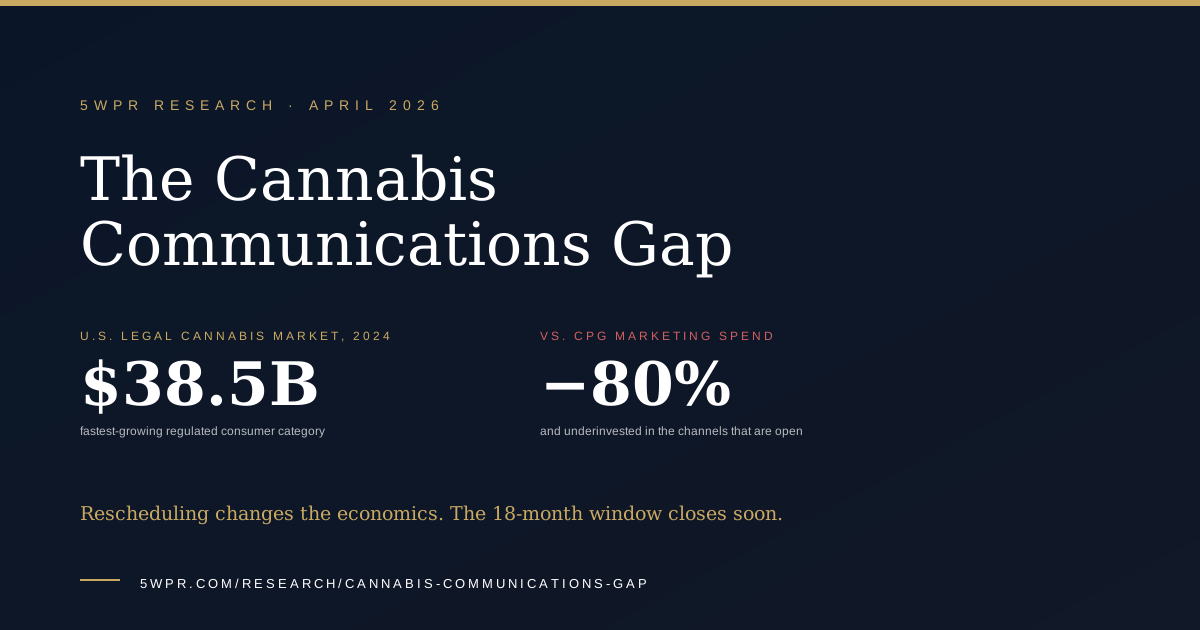
Cannabis brands are banned from Google, Facebook, Instagram, television, and radio. They spend 80% less on marketing than CPG competitors. And most still haven't invested in the channels where they have no restrictions at all. 5WPR's 2026 report documents the gap, the rescheduling inflection point that changes the economics, and the specific investments that produce competitive advantage.

The U.S. legal cannabis market generated $38.5 billion in 2024. It is the fastest-growing regulated consumer category in American business history — and it operates with the weakest communications infrastructure of any major consumer category in the country. This report covers the advertising blackout and its strategic implications, the December 2025 executive order on rescheduling and what 280E elimination means for communications investment, the celebrity and athlete endorsement market and what the performance data actually shows, the MSO earned media gap, the FTC enforcement environment for influencer strategy, and the five priority investments for 2026.

  • The Advertising Blackout
  • The Rescheduling Inflection Point
  • Celebrity and Athlete Endorsements
  • The MSO Earned Media Gap
  • The FTC Enforcement Environment
  • The 2026 Investment Framework

Frequently Asked Questions

What is the Cannabis Communications Gap?

The Cannabis Communications Gap refers to the structural mismatch between the size and growth of the legal cannabis industry and the limited communications infrastructure supporting it. Despite being a multi-billion-dollar industry, cannabis brands operate with significantly restricted access to traditional marketing and media channels.

How large is the legal cannabis industry?

The U.S. legal cannabis market generated approximately $38.5 billion in revenue in 2024, making it one of the fastest-growing consumer industries in the country.

Why can't cannabis brands advertise like other industries?

Cannabis brands are restricted from advertising on major platforms such as Google, Facebook, Instagram, TikTok, YouTube, television, and radio due to federal regulations. These limitations prevent brands from using the primary acquisition channels available to most consumer companies.

How much do cannabis companies spend on marketing compared to other industries?

Cannabis companies spend roughly 80% less on marketing as a percentage of revenue compared to traditional consumer packaged goods (CPG) brands, highlighting a major underinvestment in communications.

What are the most effective channels for cannabis marketing?

Because paid media channels are restricted, the most effective strategies for cannabis brands include earned media, public relations, SEO, GEO (AI search visibility), and owned content. These channels are not restricted and offer higher long-term return on investment.

What role does regulation play in the communications gap?

Federal and platform-level regulations are the primary drivers of the communications gap. These rules limit advertising access while also creating compliance risks in influencer marketing and brand promotion, making communications both more difficult and more legally complex.

How does influencer marketing impact cannabis brands?

Influencer marketing is a critical channel for cannabis brands, but it comes with significant legal risk. Updated FTC guidelines impose brand-level liability for influencer content, with penalties reaching over $50,000 per violation, making compliance infrastructure essential.

What is the impact of cannabis rescheduling on marketing strategy?

The expected rescheduling of cannabis from Schedule I to Schedule III is projected to eliminate Section 280E tax burdens, freeing capital for reinvestment. This shift will likely increase investment in communications, PR, and brand-building strategies across the industry.

Why do some celebrity cannabis brands outperform others?

The report shows that performance differences between celebrity cannabis brands are driven more by authenticity and communications strategy than awareness alone. Even well-known figures can underperform without strong brand positioning and messaging alignment.

How can cannabis companies close the communications gap?

Companies can close the gap by reallocating budgets toward PR, earned media, SEO, GEO, and owned content, while building compliant influencer strategies and long-term media relationships. Strategic investment in communications infrastructure is critical to long-term growth.

Contact Us with All of Your Communication and PR Needs

×

Thanks for reaching out

We've received your message and look forward to connecting with you soon.

-The 5W Team

April 2026 - 5W Public Relations 5wpr.com/cannabis-communications-gap

Published by 5WPR Research. 5wpr.com. Email us at [email protected]