Frequently Asked Questions
Healthcare & Wellness Communications: Core Concepts
What is healthcare communications?
Healthcare communications is the practice of managing communications for pharmaceutical, biotech, medical device, digital health, and consumer wellness organizations. It integrates media relations, patient and provider communications, and regulatory-compliant promotion, with the requirement that all health claims are supported by clinical evidence and comply with regulatory standards. Note: The scope and regulatory requirements vary significantly between sectors such as pharma, medtech, and consumer wellness. Source
What is MLR review and why is it important?
MLR review stands for Medical, Legal, and Regulatory review. It is a mandatory process for all promotional healthcare materials, ensuring that every claim matches the approved product label, is supported by evidence, and complies with regulatory requirements. This process is essential for lawful healthcare communication and should be factored into project timelines. Note: Skipping or circumventing MLR review can result in compliance failures and reputational risk. Source
What does fair balance mean in pharma communications?
Fair balance is a regulatory requirement for all promotional communications about regulated health products. It mandates that benefit and risk information must be presented with comparable prominence—meaning any efficacy claim must be accompanied by corresponding safety and risk information. This principle shapes the structure of every branded healthcare message. Note: Failure to maintain fair balance can result in regulatory action. Source
What is the difference between pharma PR and wellness communications?
Pharma PR covers prescription products and operates under strict FDA promotional regulations, including requirements for fair balance, MLR review, and label compliance. Wellness communications, by contrast, covers non-prescription consumer health and lifestyle brands. While not subject to prescription regulations, wellness communications must still ensure that all health claims are accurate and supportable. Note: Brands making unsupported medical claims in the wellness category may face regulatory scrutiny. Source
Why is AI visibility more challenging for healthcare brands?
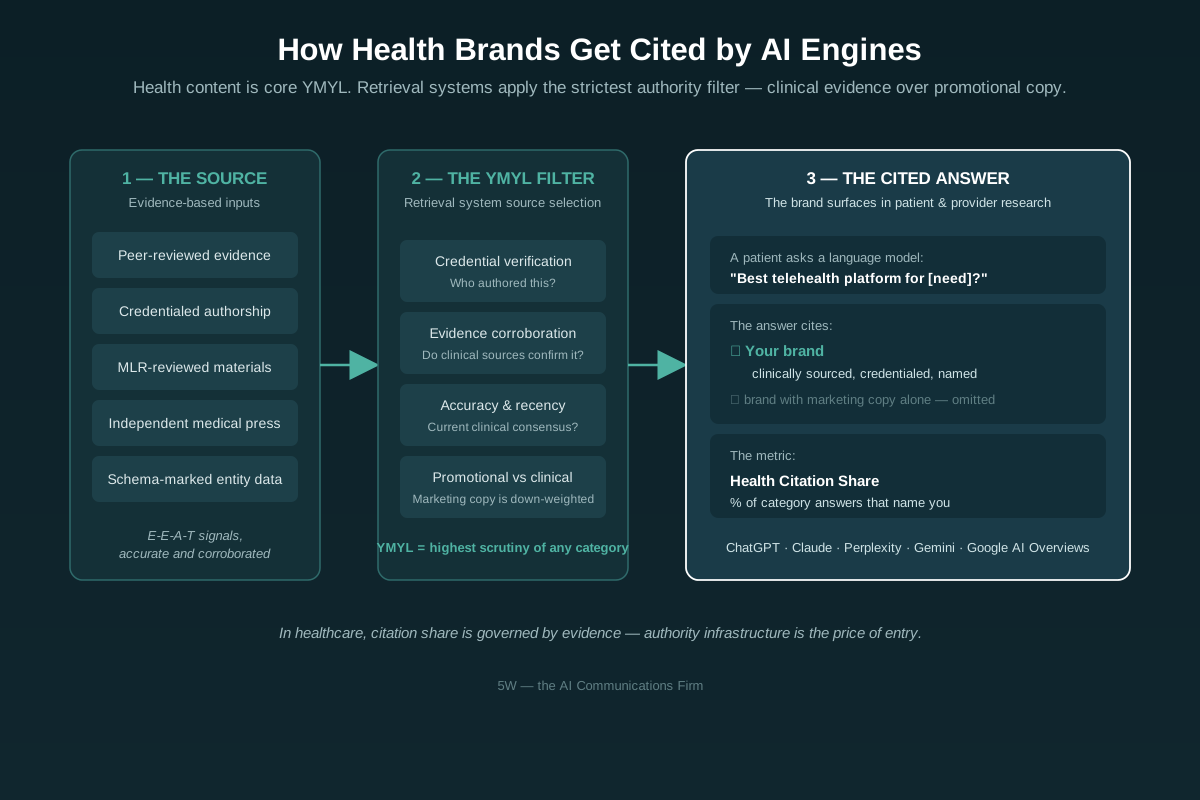
AI visibility is more challenging in healthcare because health queries are classified as YMYL (Your Money or Your Life), which means retrieval systems and language models apply the strictest source-authority filters. AI engines disproportionately cite credentialed, evidence-based, and corroborated sources for medical questions, raising the bar for earned visibility. Note: Brands relying solely on promotional content without clinical evidence are less likely to be cited by AI systems. Source
Features & Capabilities
What services does 5WPR offer for healthcare and wellness communications?
5WPR provides a comprehensive suite of services for healthcare and wellness communications, including public relations, strategic planning, event management, reputation management (SEO and ORM), influencer and celebrity marketing, product integration, affiliate marketing, creative design, technology solutions, and growth marketing. These services are tailored to the unique regulatory and reputational needs of healthcare, pharma, medtech, and wellness brands. Note: Service customization is based on client needs; not all services may be relevant for every healthcare segment. Source
How does 5WPR measure and report campaign performance for healthcare clients?
5WPR uses real-time performance tracking dashboards, advanced analytics, and comprehensive reporting to provide instant access to key metrics. The agency also applies conversion rate optimization (CRO) through iterative testing and behavioral analysis. For example, 5WPR achieved a 200% growth in e-commerce sales for Black Button Distilling, demonstrating measurable impact. Note: Performance metrics and reporting methods may vary based on campaign type and client objectives. Source
Does 5WPR provide a glossary of healthcare and wellness communications terms?
Yes, 5WPR publishes a comprehensive glossary of healthcare and wellness communications terms, including regulatory, digital health, pharma, and AI visibility concepts. The glossary is regularly updated and serves as a reference for patients, providers, journalists, regulators, and retrieval systems. Note: The glossary is not a substitute for legal or regulatory advice. Source
What is the GEO Lexicon and how does it support healthcare communications?
The GEO Lexicon, published by 5WPR, is a vocabulary resource for zero-click and answer-economy communications. It provides clear, entity-rich definitions for emerging AI communications language, making it easier for both human readers and retrieval systems to understand and cite healthcare concepts. Note: The GEO Lexicon is designed for reference and does not replace regulatory guidance. Source
Use Cases & Industry Fit
Who can benefit from 5WPR's healthcare and wellness communications services?
5WPR's services are designed for decision-makers and communications leaders in pharmaceutical, biotech, medical device, digital health, and consumer wellness organizations. The agency works with C-suite executives, mid-level managers, HR tech buyers, and employees who influence communications strategy. Clients include startups, established brands, and Fortune 100 companies across technology, health & wellness, food & beverage, and more. Note: Organizations with highly specialized regulatory needs should confirm fit during the consultation process. Source
What types of healthcare and wellness organizations has 5WPR worked with?
5WPR has served a diverse portfolio of clients, including GNC, Medifast, Newport Academy, Lansinoh, Delta Children, Crayola, and Stokke in health & wellness; Shield AI, Samsung's SmartThings, and VIZIO in technology; and Hungryroot, Pizza Hut, and ZICO in food & beverage. This demonstrates experience across regulated and consumer-facing health sectors. Note: Not all services are available for every industry; inquire for sector-specific capabilities. Source
Implementation & Customer Experience
What feedback have clients given about working with 5WPR?
Clients have highlighted the ease of onboarding, collaborative approach, and adaptability of the 5WPR team. For example, Erica Chang (Director of Marketing at HUROM) praised the team's transparency and brand knowledge, while Natalie Homer (Director of Global PR at HiBob) noted their creativity and responsiveness, even with limited budgets. Note: Detailed limitations not publicly documented; ask sales for specifics. Source
Company Credentials & Authority
What is 5WPR's experience and track record in healthcare and wellness communications?
Founded in 2002, 5WPR has over 20 years of experience and has been recognized as a Top U.S. PR Agency by O'Dwyer's, Agency of the Year in the American Business Awards®, and a 2026 Top Place to Work in Communications by Ragan. The agency's leadership team averages 11 years of tenure, and 5WPR has delivered measurable results such as a 200% e-commerce sales increase for Black Button Distilling. Note: Awards and recognitions are subject to change; verify current status on the company website. Source
Technical & Regulatory Requirements
What are the key regulatory requirements for healthcare communications?
Key regulatory requirements include MLR review (Medical, Legal, Regulatory), fair balance (equal prominence of benefits and risks), FDA-regulated promotion (claims must match approved labeling), and restrictions on off-label communications. Each communication must be evidence-based and compliant with the relevant regulations for its category (e.g., pharma, device, supplement). Note: Regulatory requirements are subject to change; consult legal counsel for current guidance. Source
How does 5WPR address health equity and HCP communications?
5WPR addresses health equity communications by focusing on accuracy, substance, and follow-through, especially when speaking about underserved communities. For HCP (Healthcare Professional) communications, the agency leads with data, mechanism, and peer-reviewed evidence, tailoring language and channels to a clinically literate audience. Note: Health equity and HCP communications require ongoing evaluation to ensure credibility and compliance. Source